

The European expanded polystyrene (EPS) industry continues to innovate to meet Europe’s environmental and energy goals. A recent development by BEWI, a member of EUMEPS, introduces industry-first grey EPS raw material and insulating boards made entirely from recycled feedstock, an important step forward in combining circularity with energy-efficient building performance. This innovation builds on the European EPS industry-wide efforts to reduce waste, lower CO₂ emissions and improve insulation standards across Europe.
A new material for more efficient buildings
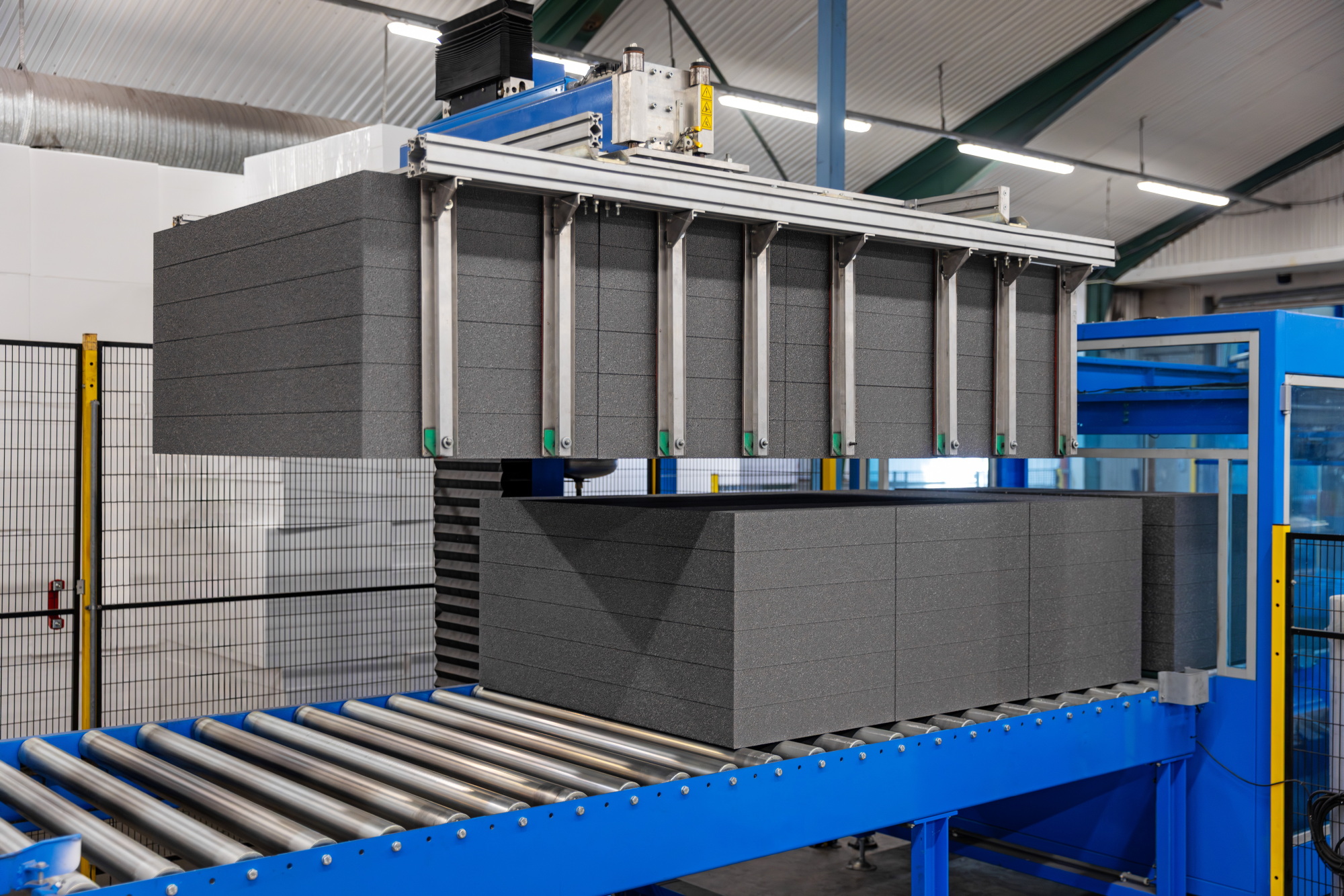
Grey EPS includes graphite, which enhances insulation performance compared to traditional white EPS. The integration of recycled feedstock into grey EPS production reduces the material’s carbon footprint while maintaining the same physical properties, such as compressive strength and low water absorption. These improved insulation characteristics support Europe’s push for energy-efficient buildings and help meet increasingly strict construction regulations in countries such as Denmark.
Circularity and industrial collaboration
The use of recycled grey EPS is part of a broader effort by the EPS industry to increase circularity and resource efficiency. BEWI has been at the forefront of developing insulation boards based on this recycled raw material. Through its Circular division, the company collects and recycles used EPS with an annual run rate of approximately 40,000 tonnes, reusing the material as feedstock in its own production. This closed-loop approach helps reduce waste while supporting the EU’s transition to a circular economy.
Maintaining quality and reducing emissions
“GreenLine Super EPS reduces CO₂ emissions supporting carbon reduction targets in the building and construction industry while maintaining the same technical properties and insulation performance,” says Karl Erik Olesen, Chief Operating Officer of BEWI’s Downstream segments.

Conclusion
The development of recycled grey EPS by BEWI illustrates how innovation within the EPS sector supports Europe’s sustainability ambitions. By advancing recycling technologies and producing high-performance insulation materials, the industry contributes to the objectives of the Clean Industrial Deal and the EU’s building renovation strategy. This demonstrates that the European EPS industry is dedicated to a more circular, low-carbon, and energy-efficient Europe.